
Giggling and Dribbling – SCORES Poet-Athletes Flourishing
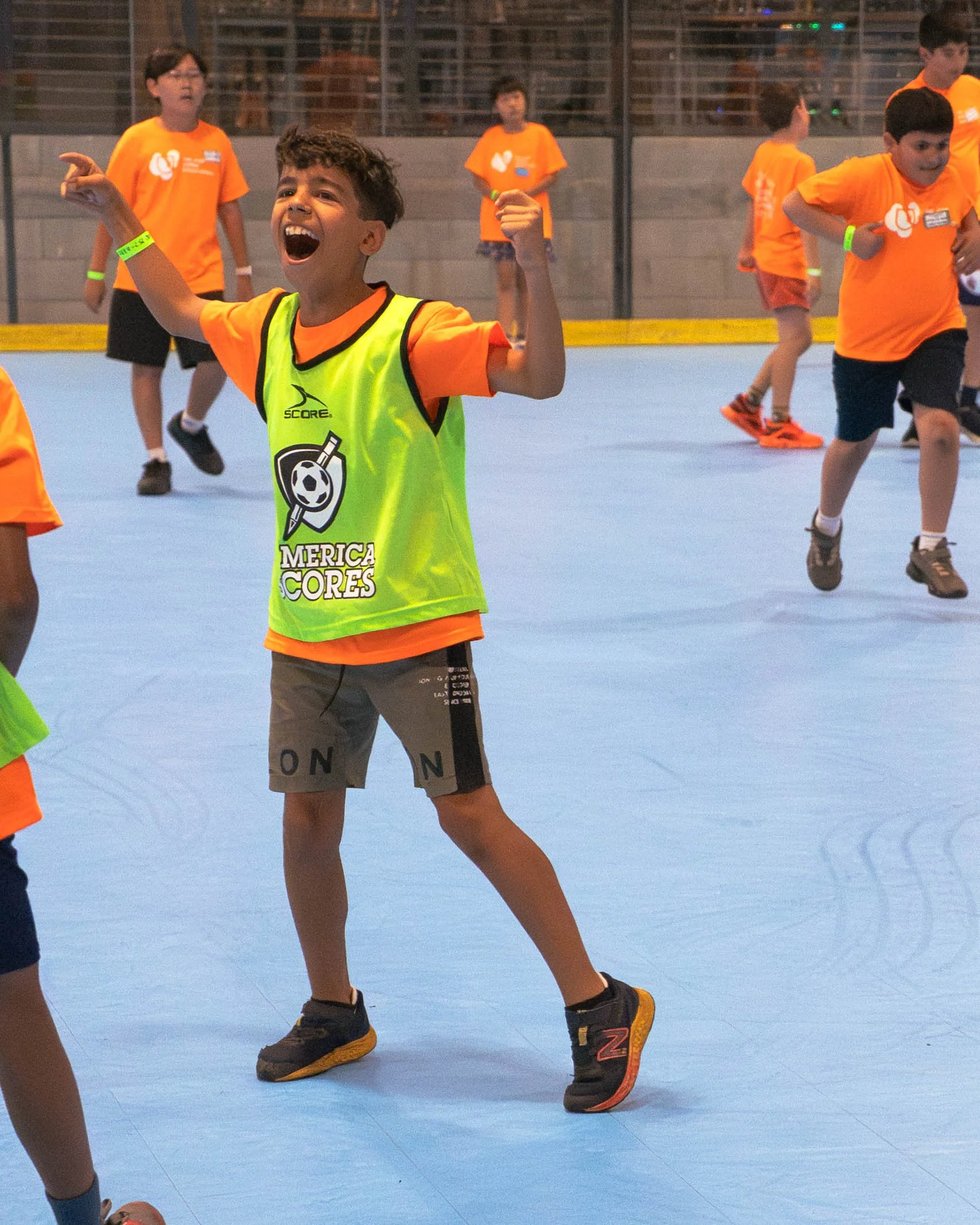
SCORES' joyful, team-based play environment builds the social-emotional skills — self-regulation, resilience, collaboration — that help kids stay in school, navigate hard moments, and show up for each other
What does it take for someone to flourish in life? And what does real flourishing look like?
Harvard University’s Human Flourishing Program asks just that, examining the dimensions of flourishing and the pathways, relationships, and conditions that make it possible. The program’s Flourishing Measure measures six domains: happiness and life satisfaction, physical and mental health, meaning and purpose, character, close social relationships, and financial stability.
A recent study from the program, "Adolescent Flourishing in Schools”, surveyed 20,000 12- to 18-year-olds and found that joyful play is a big part of flourishing, along with laughter with peers, activities that strengthen social relationships, and strong relationships with caring adults. Collectively, these are the strongest predictors of adolescent flourishing in school. Early-childhood research finds that the same elements—fun and happiness, nurturing relationships, and positive health behaviors—predict school readiness and early learning skills.
“The presence or absence of play, particularly in child development, has a great deal to do with competency, resiliency, emotional health [and] brain size. Play is not frivolous and not just for kids, but something that is an inherent part of human nature”
How could something so much fun – play – be so critical and so potent in relation to real impact? Undoubtedly fun in the moment, joyful play also has a long tail. Engage in play, and the benefits quickly cascade: positive emotions, a sense of agency, the thrill of movement, and physical and social connection. Further studies have linked play to higher academic achievement, more creativity, and enhanced social skills, including collaboration and persisting through challenges. The U.S. Institute of Education Sciences describes joyful learning as supporting deeper understanding of content and developing critical thinking, creativity, and confidence
America SCORES knows this in its bones. It’s not simply chasing grades that leads to flourishing in schools. Rather, academic achievement appears to be a natural byproduct of a richer, more active, and more connected community and learning environment. SCORES brings those flourishing ingredients directly into elementary schools, combining joyful team play with creative expression and caring adult mentorship at the exact developmental stage when these capacities first take root.
“SCORES is built around an evidence-aligned insight: children thrive when they feel they belong, when their voices matter, and when they can take joyful risks in a supportive community,” says SCORES Executive Director Colin Schmidt. “Through team soccer, kids build relationships, move their bodies, practice cooperation and communication, and discover the confidence that comes from effort and shared goals. Through poetry, they develop language, reflection, identity, and agency and gain confidence through practice and performance.”
Research connects school belonging to stronger motivation, engagement, attendance, and academic achievement and identifies school connectedness as a protective factor against youth depression and anxiety. Research also links a sense of purpose to lower risk of depression and greater academic persistence and performance.
SCORES then adds more to the equation, layering in community and purpose. Biobehavioral research demonstrates that sustained social connection in community is a foundation for mental health, both short- and long-term. Leveraging a deliberate, time-tested program and curriculum. SCORES creates the developmental conditions that protect mental health and support learning—belonging, purpose, active play, caring relationships, and meaningful participation.
All of it wraps back to the enormous value and flourishing potential of play – play with words and ideas, play with a ball on a field, play with friends and peers, and play in a place of community and belonging. We should all be so lucky as to have such an amalgamation of gifts in our lives.