
Fabiola Gomez
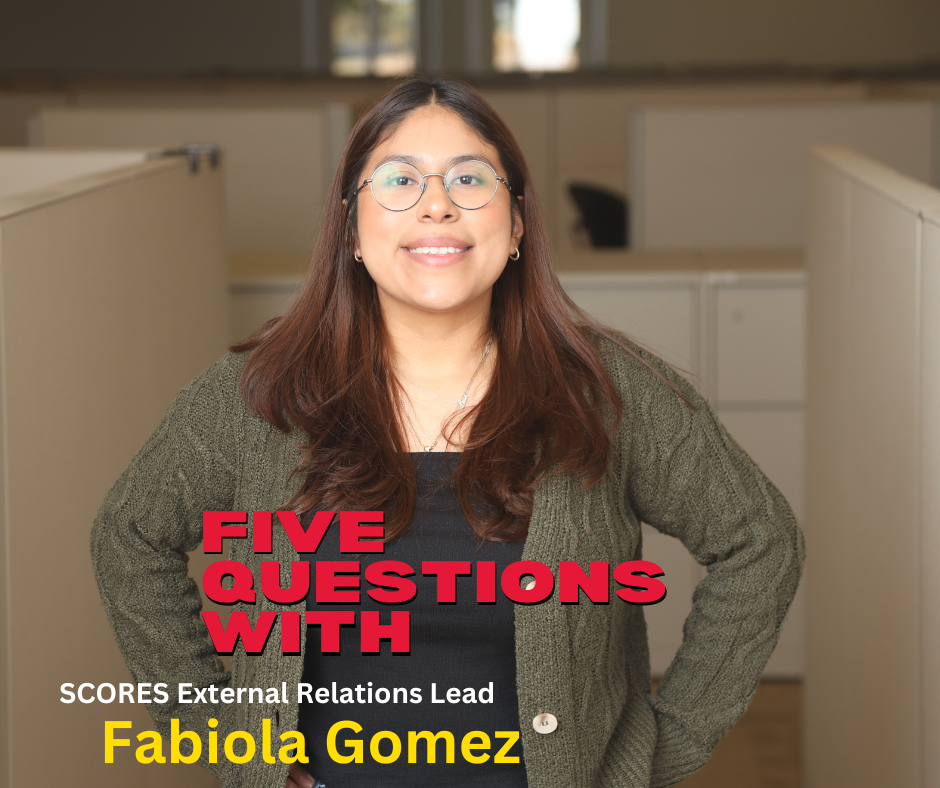
Fabiola Gomez grew up on the East Side of San Jose, the daughter of parents from Oaxaca, Mexico. She is America SCORES Bay Area's External Relations Lead, where she supports partnerships, media, and community events. Fabiola joined SCORES in early 2026 after working as a Community and Marketing Coordinator at Telemundo, where she helped launch the World Cup-focused Copita initiative, which brought her into the SCORES orbit. We talked with Fabi about where she comes from, what opened doors for her, and what she sees when she looks out at a field full of SCORES kids.
You grew up on the East Side of San Jose. How would you describe that to someone whose idea of San Jose is basically Silicon Valley?
San Jose is definitely a melting pot. There are communities of every sort of people. You have your Mexican neighbors, your Asian neighbors, your African American neighbors, your Portuguese neighbors, your Turkish neighbors. But when we think about San Jose, we often think about Silicon Valley. We think about tech, we think about money. But we forget about those communities that bring all of that up. Being from the East Side, knowing the history, knowing how my community has been impacted — I wanted to push the message out about all the dynamic diversity that is here. I want to continue to uplift my community, which is under-resourced and sometimes not showcased as it should be, because my community —and the people who live there — really excel at a lot of things.
You were part of a program called the Peninsula College Fund starting in high school. What was that, and what did it do for you?
The Peninsula College Fund is an intense four-year scholarship for first-generation college students. I applied as a high school senior and stayed in it all four years through Cal State East Bay. Every summer there were networking conferences. Workshops on our values, our missions, finding ourselves, preparing us for our careers. Elevator pitches, eye contact, résumé help, cover letter help. All the professional development that, if you're a first-generation student, nobody has necessarily taught you.
The biggest lesson: Say yes to everything — and enjoy it, because it's all fun. Even the hard stuff is fun because it teaches you how to overcome challenges. And remember this: If you feel like you don't belong in a room, you belong. For first-gen students, our scope can be a little limited. We're sometimes not exposed to everything that's around us. Networking opens up doors to positions you wouldn't think are even jobs out there.
I love that idea of recognizing that you belong in a room. It’s facing imposter syndrome. How do you get around it? Get yourself to believe you belong in the room?
Imposter syndrome is definitely always going to be there, but you have to learn to work around it. To this day, I'm still very timid and shy. But being vulnerable and still pushing yourself out there just shows how good of a person you are, and it's valuable to companies.
My little tips: always take a breather before you walk into a room. Calm your nervous system. If you feel like you're going to mess up, make a joke out of it — because people will remember the joke more than the fact that you messed up. And bring it back to gratitude. Just being grateful that you're in this place, in the position you're in. That reframe helps more than people realize.
Your parents are from Oaxaca. What has their background given you that you carry with you?
My parents are from Oaxaca. I was the first in the family born here. But my parents have brought Oaxaca culture here, and its deeply rooted traditions have stayed alive in my family. One is the Guelaguetza. Every July, during the week of the 20th, Oaxaca's seven regions each celebrate with traditional dances and food. The mole, the pozole, the handmade tortillas. Another is Día de los Muertos: in Oaxaca, they spend the entire night at the graveyard honoring the dead. And in marriage — if you're going to ask your girlfriend to be your fiancée, traditionally your entire family goes to her family's house with an offering. Food, household goods, sometimes furnishing the entire home for the newlyweds with pots, pans, silverware, even sofas and beds. It's a couple of days of families celebrating and honoring each other.
Those traditions have traveled here with my parents. They're still alive. And I think what they've given me is a sense that we are all connected. You don’t do things alone, and you show up for each other. That's something I carry with me
When you're at a SCORES Game Day, and you look out at the students and their families, what do you see?
I see the drive, I see the hunger, I see the humbleness too. And I see them arriving to the games with their entire families, all of them together as a unit. It reminds me of a typical Sunday growing up, where all my family would go out together, whether it was to the park, to church, or to a gathering. It was all of us together. More than anything else, I look at our community, our SCORES students and families, and I see unity.
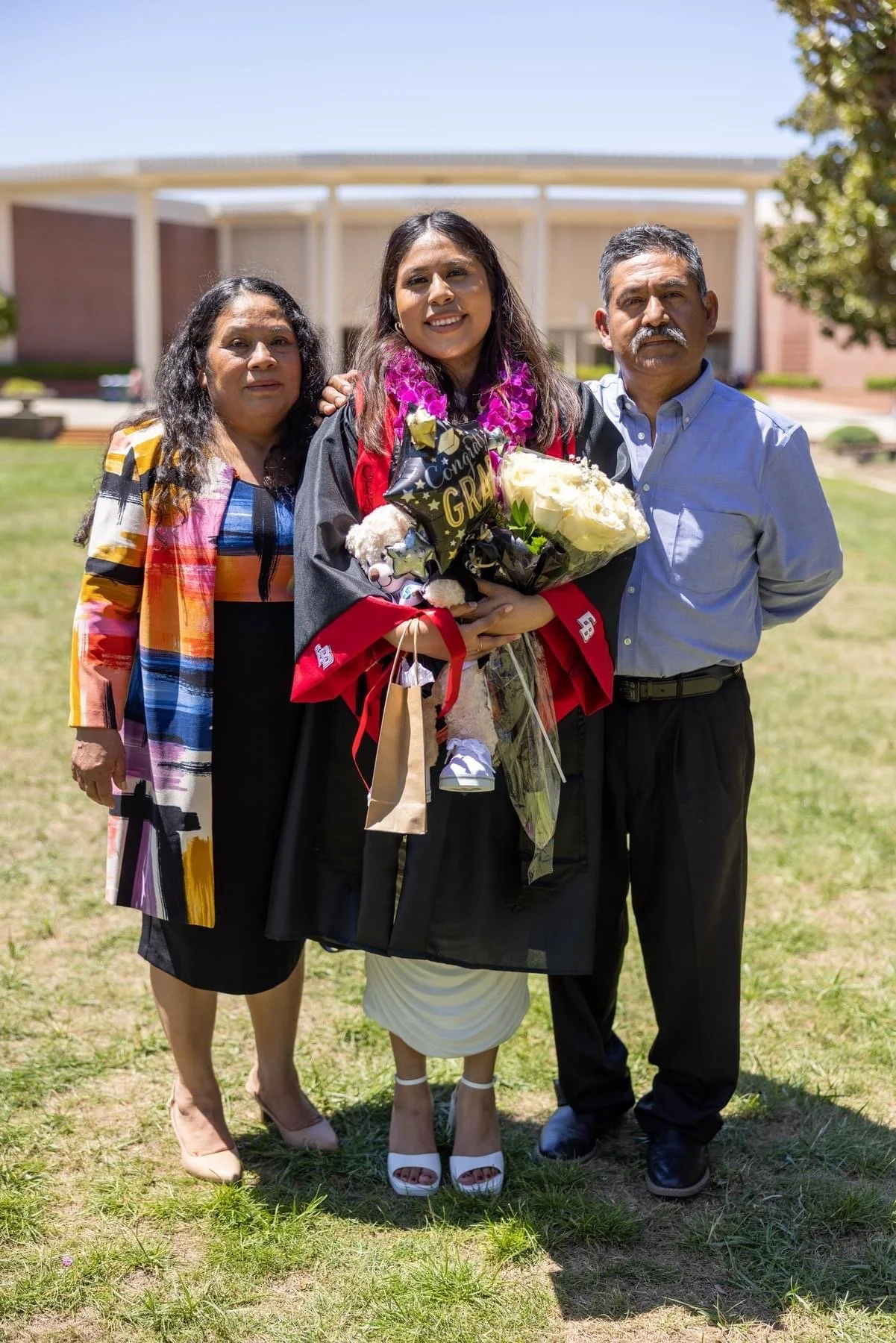
Fabiola Gomez and her parents
To read more SCORES Five Questions With conversations, go here!