Virginia "Gini" Dold
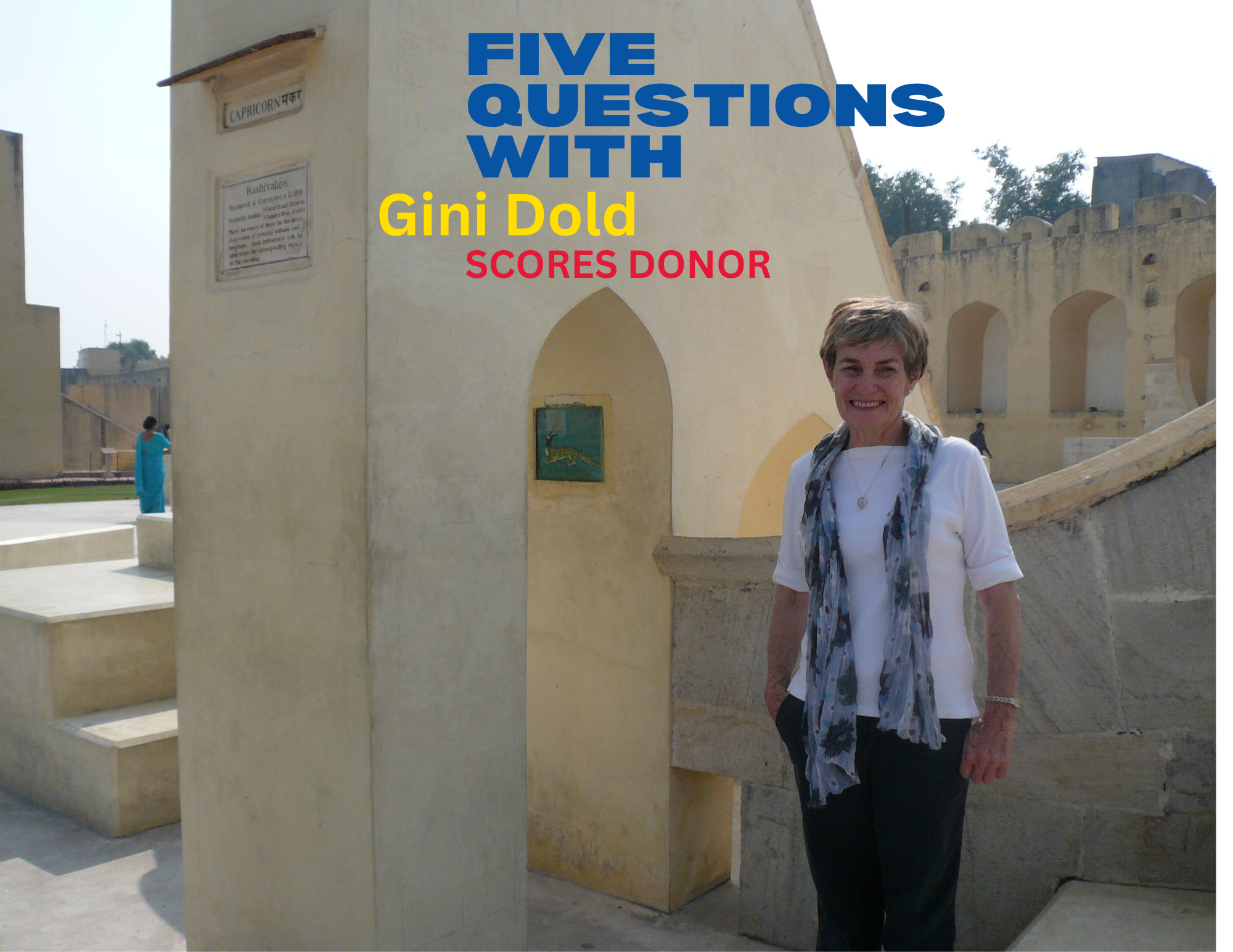
Virginia "Gini" Dold
Former principal, E.R. Taylor Elementary School; SCORES Legacy Award recipient; and longtime donor
Virginia "Gini" Dold was principal of E.R. Taylor Elementary School in San Francisco's Portola neighborhood from 2001 to 2012. Then one of the largest public elementary schools in the city, with roughly 700 students across English, Spanish bilingual, and Cantonese bilingual classrooms, E.R. Taylor was named a Blue Ribbon Distinguished School by the U.S. Department of Education in 2009; the award recognizes K-12 schools that demonstrate exceptional leadership, teaching quality, and community dedication.
SCORES has a deep legacy at E.R. Taylor through longtime SCORES coach Manny Amaya. E.R. Taylor has produced multiple standout Poet-Athletes, including National Poetry Slam winners.
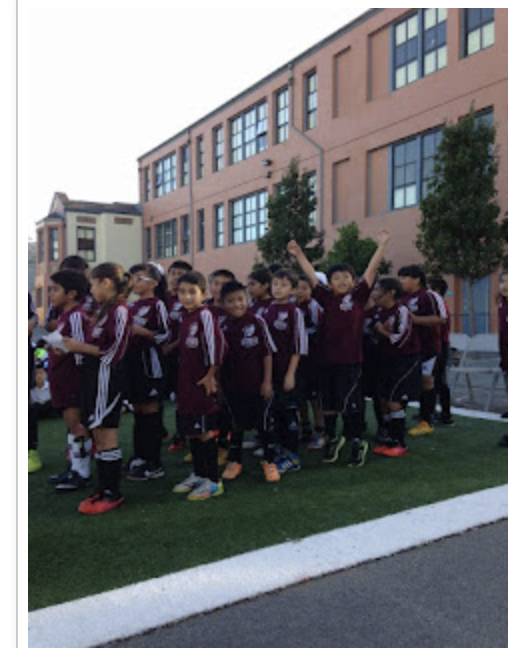
In 2012, the year she retired, SCORES honored Dold with a Legacy Award, acknowledging her deep commitment to leadership, community service, and expanding educational and recreational opportunities for San Francisco's youth. In 2014, E.R. Taylor students chose to name their new turf field (one of SCORES’ earliest Field of Dreams projects) for their former principal.
Today, Dold lives in Seattle, where she volunteers two mornings a week at a community breakfast program for people experiencing homelessness and serves on the program's board. She spoke with us about leadership, how best to support students, and her long connection to SCORES.
These are lightly edited excerpts from our conversation.
You led E.R. Taylor for over a decade. How did you think about leadership?
My theory of leadership is multifaceted, but at its core, it's the idea that shared leadership is built on relationships with your staff, your parents, your kids. I also deeply believe in being a servant leader. You’re there to support others. The teachers did the hard work. The principal gets the accolades, but the teachers did the hard work.
That said, leadership is critically important. People have to trust you. And if you're going to bring in something new — a guided reading program, a writing program, a math program — not everybody is going to jump in right away. So you pick one or two groups you know will actually take it on, and you build from there. You need models. People who really embrace it and see a change, so others can see it working. And then you need accountability. If you're going to ask the school to try something, there has to be follow-through. Without that, things fall apart, and people go back to their old ways.
You also have to pick leaders in the school who are respected not just by you, but by the other teachers. You had to make sure you had the right people on your side.
Before you became principal, you spent years working directly with kids as a resource specialist and then essentially as a social worker coordinating support services. How did that shape your educational philosophy?
I approached teaching and leadership through that lens — really wanting to meet the kids’ specific needs. Before I became principal, I was part of a team that secured a Healthy Start grant to bring support services into the school: a nurse practitioner, counseling, a social worker, and a woman who coordinated it all. The team would meet with the parents and say, "Here's what we're seeing. Tell us about your child”, and then would figure out what they needed, be it tutoring or support or whatever. I took over after she retired and became like a social worker. I ran that program for about six or seven years before I became principal. I learned that unless you first deal with a child’s emotional and social issues, the distractions will come in. You have to set that foundation first so kids can actually take advantage of the academic program.
And I really believed we all had to be on the same train moving in the same direction. In many schools, second grade does this, and fourth grade does that. I personally believed you all had to be working together. We used data to drive our decisions. For example, we figured out that our kids could read, but they didn't really understand what they were reading. They didn't have the language background or content knowledge. So we embraced a school-wide reading comprehension program. The leader provides that direction. That's one of the things E.R. Taylor was recognized for: not that our scores were necessarily so much higher than anyone else's, but that our scores, given our population, were high.
How did you think about after-school programming — where did it fit in everything you were doing for kids?
I never viewed after-school as something separate from the school-day program. I had a wonderful coordinator, Gabby Guinea, who ran our after-school program. When we met with families and figured out what a child needed in the classroom, she would come and sit in on those meetings because those were often the same kids she had after school. Teachers would seek her out: “This kid isn't getting his homework done. Can we figure out something so he still gets playtime but also gets what he needs?” The staff in our after-school program often worked during the day as aides, too. So after-school wasn't something out there that was great but separate. It was ours.
And then personally, my children all played soccer. My husband coached high school soccer. So when SCORES came along, I embraced it right away, because I knew the value of playing on a team and the leadership it provides. It's just healthy. And the poetry part was such a bonus. I used to go to some of the games on Saturday, and I was told I was one of the few principals who did that. But I love soccer, and I wanted to see our kids. At E.R. Taylor, we embraced people like (longtime SCORES coach) Manny Amaya*, and made them feel part of our culture. We wanted him to feel like he was part of the whole school community. Not just someone who showed up.
E.R. Taylor produced several exceptional SCORES alumni. Several of them were there when you were principal. Let’s celebrate them here!
Yes! There was Anthony Spears, who was then a selective mute. I remember meeting with his wonderful parents, trying to figure out how to reach him. And then through SCORES, his voice came out! He ended up going to New York for the National Poetry Slam and rang the bell at the Stock Exchange. That was Anthony! *
And Bridgette Marin-Valencia, who was a kindergartner my last year. She was very quiet and extremely shy. SCORES was her introduction to soccer. From there she soared. Before she was a teenager, she made the Mexican National team and went on to play at UCLA, where she’s now a senior. Her older sister, Natzayelly, was a good soccer player too. I remember that fifth-grade class when I retired. The girls were better than the boys. I loved it! *
*SCORES produced video stories on both Anthony and Bridgette and on Coach Manny.
You’re a longtime donor to SCORES. Why do you keep giving?
I believe that it’s a very worthwhile program, and as long as I can, I'll continue giving. It's an automatic deduction. It's not a ton of money. But I feel strongly about it.
If someone asked me why, I’d say it's youth development. It's what kids get from being on a team. And these are kids who don't, in general, have as many opportunities as middle-class kids whose parents are paying for them to be in clubs. I'm in Seattle now, and I watch my grandchildren play on club teams — it costs a fortune! Three, four hundred dollars a month, not counting travel. Most clubs have a scholarship or two, but not much. SCORES is a powerful opportunity for kids who would otherwise be left off the field. There’s the physical piece of SCORES, the leadership piece, the poetry piece, and I think it builds character.
When I look back at what we had at E.R. Taylor — the way SCORES fit into what we were doing with kids, the way Coach Manny became part of our community, the field the students named for me — that wasn't an accident. The SCORES model and what we were trying to do for those kids pointed in the same direction. That's why I give. That's why I'll keep giving.
To read more Five Questions With Conversations, go here!
Field of Dreams
By the E.R. Taylor Select Team
November 7, 2014
The time is 2:40 and I’m getting excited
Its been a very long time, I’m not gonna fight it
We wait for the bell, its about to start
I look over my shoulder, there’s no more black patch.
Our community had a dream, more like a story
We wanted to play soccer without a worry
Cuz every time I came home
My parents would hurry
To clean my cuts and bruises and hear my stories
Now we have a brand new patch of green
Sometimes I think, “is it just a dream”
We got a gift, our very own field of dreams
Our whole community gets to use it
But I really enjoy it with my SCORES team
So we say thank you for our very own patch of green
Now if I fall it won’t hurt
We are the E.R. Taylor SCORES team
And we welcome you to our Virginia Dold Field of Dreams!