
David A. Calderon Varguez
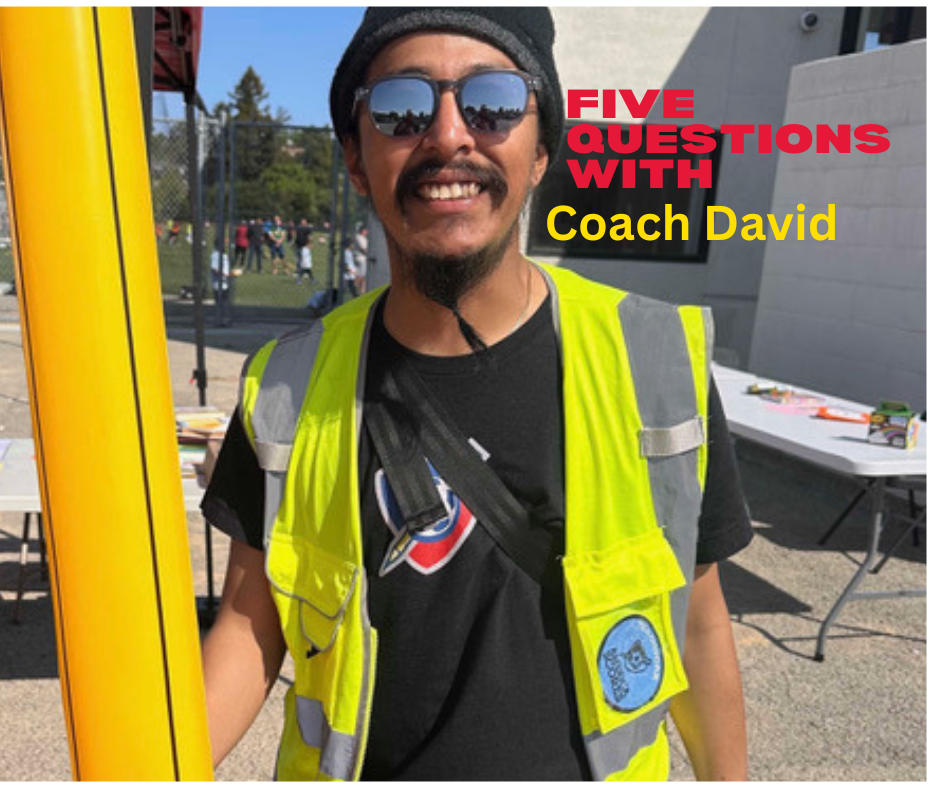
David is in his third year with SCORES, coaching students from fourth through eighth grade. As SCORES Senior Program Coordinator in West Contra Costa County, he has gained a reputation as an inspiring poetry coach. We spoke with him about his earliest experiences with poetry, the transformative power of the writing process, and the connections he sees between songwriting and poetry.
What were your early exposures to poetry?
My introduction to poetry started early in my life. I memorized poetry given to my second-grade class by our teacher in Mexico. My mom was also an influence. She used to sing lullabies written by the Mexican songwriter, Francisco Gabilondo Soler. Later, I studied poetry and performance with poets like Tina Chang, Victoria Redel, and Paul S. Flores at the Brava Theater Center and Youth Speaks in San Francisco, and later in the playwright and poetry workshop program at Sarah Lawrence College.
What do you think the process of writing gives us?
We all love to talk about ourselves, and writing provides that space. We use words to describe how we experience the world. I think that when people hear about writing, they expect some sort of perfection, either in the academic or storytelling sense. I don’t think writing is so much about the formalism as getting to know yourself on the page by describing your life experiences. Writing is a mirror that materializes your experiences in this reality, where you can no longer deny their existence. Once this form of writing is understood, academic writing and fiction become accessible and exciting. People understand they can express their experiences in made-up worlds and universes of their own.
Where do you find inspiration for the poetry you write?
Inspiration comes in all forms and shapes. I write about everything I experience. I also believe everything is worth paying attention to, and everything’s existence is worth acknowledging. That’s where my inspiration comes from – the wonder of everything around us. Why do we only shine a light on certain aspects of this so-called life? There are meanings and lessons to be learned everywhere.
We learned that you have music credits as lyricist/writer on the track “Audazes” (featuring Yaott & Ketzal) by 40Daiz and on "Cenar" by Komondo Dragunn. Do you find a connection between writing song lyrics and poetry, and is the process similar?
When I was a kid, I wanted to be a musician. I dreamed of playing the piano and guitar, even the drums. My family had different needs, and we could never spend on any musical instruments. But a pencil, pen, and paper are not hard to find. Once I figured out that our voice is an instrument itself, I dedicated the beginning of my life to experiencing the art forms of spoken word and rap. This led me to understand poetry and its musical devices and properties. The beats within a bar in music are like the syllable count in a meter in poetry. Verses can be stanzas on paper. Cadence, voice, tone, and emphasis–these are also important when writing musicals for the stage. People enjoy poetic songs with images that connect them and remind them of themselves. My desire to make music led me to meet poetry, and poetry led me back to music. I think that sums it up: If you want to become a songwriter, you will meet poetry along the way, and if you want to be a poet, you will become a musician as well.
What is your coaching philosophy?
My philosophy when it comes to coaching is to let students understand that learning is a process in anything we do in life. I like to instruct my students by first setting up or asking permission. Next, we jump into action on whatever our intentions for the day are. Lastly, we reflect on how our actions match our intentions. I let my students know that the way they show up on the soccer pitch is how they show up in their own lives outside of it. Life is a constant practice of what we learn, taking that knowledge to the spaces we go and sharing it with others. My philosophy is that we’re not only learning soccer or writing skills. We’re engaging in a process of learning where we sustain and evolve that knowledge into new creations. I let my students know that they can push their creations even further with dedication, time, and energy. I tell my players, I’m not only teaching you soccer; I’m teaching you how to live, too.
Read more Five Questions With stories here.